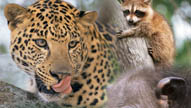
Classification of Living Things
Running Time: 23 minutes
| DVD | 515 | $99.95 | |
| Stream 30 Day-1 user | 515online | $49.98 | |
| Stream 1 Year-1 user | 515online | $99.95 | |
| Stream 1 year-5 users | 515online 1-5 users | $299.85 |
 Available for Streaming Video Rental
 Request Free Online Full Length Preview


There are millions of different species living today, and these represent a tiny fraction of all the species that existed in the past. Using beautiful videography and easy-to-interpret graphics, this program illustrates how over thousands of years people have been trying to find meaning and order in the diversity of life. Students learn that how we classify living things has changed with the discovery of new kinds of organisms, and with our growing understanding of evolution and genetics. The video looks at the differences of each of the traditional five kingdoms: Monera, Protista, Fungi, Plantae, and Animalia. It then describes how this five-kingdom approach to classification has been modified as a result of recent discoveries about different types of bacteria. The video stresses that the ways in which we organize and categorize living things will continue to change in the future as new discoveries are made.
Includes:
video, plus teacher’s resource book, student handouts in digital format
Awards
Columbus International Film & Video Festival: Bronze Plaque
Reviews
Highly Recommended In what can be a very dry subject, The Classification of Living Things takes our natural curiosity about how living things relate to one another, how they are different, and how we fit in, and creates an enthusiastic yet academic examination of our biological classification system.
The film begins by having us imagine a supermarket without any organization, finding the soap by the cereal, for example. It then discusses the history of classification, and how our organization of living things changes with new knowledge and tools. It also mentions that scientists are not always in total agreement about the arrangement. It describes the five Kingdoms and the various sub-groups, discusses the Latin genus-species convention, and how evolution influences classification. The film only briefly mentions how DNA and PCR (not mentioned by name) technology changed classification trees. It ends with the latest discoveries about Archaea found living in extreme conditions and the suggestions of a three Domains approach (Archaea, Bacteria and Eukarya) to replace the five Kingdoms organization.
The film quality is excellent with entertaining footage. Highly recommended for junior high / high school libraries and public libraries.
- Christy Caldwell, Science Librarian, University of California, Santa Cruz
Educational Media Reviews Online (EMRO)